Junyao Yang

National University of Singapore

Hi, I'm Junyao. I am a second-year graduate student at the School of Computing, National University of Singapore, specializing in Artificial Intelligence, and a research intern at Tencent Hy Frontier.

My research interests focus on Agentic AI, including Agentic RL, Recursive Self-Improving, and Long-Horizon Terminus Agents; Reinforcement Learning, with a focus on RL Stability.

杨竣尧 /jɑːŋ dʒuːn jaʊ/

Agentic RLRecursive Self-ImprovementLong-Horizon AgentsRL StabilityExplainable AI
Latest updates

News

Show more ↓Show less ↑
  • Tech report: AgentDoG, a diagnostic guardrail framework with an agentic attribution module.
  • First-author paper RCP-Merging accepted to AAAI 2026 Main Track.
  • RewardDS accepted to EMNLP 2025 Main.
  • Joined Shanghai AI Lab as a research intern, working with Dongrui Liu.
  • Co-first-author paper PrivacyRestore accepted to ACL 2025 Main.
  • Joined ZeroNLP as a research assistant, advised by Professor Ziqian Zeng.
  • Contextless CS reached 20,000 daily active users.
  • Joined Tencent as a machine learning intern.
  • Completed my machine learning internship at Shenzhen Stock Exchange.
Research highlights

Selected PublicationsFull Publications

Work on agents, learning, and trustworthy AI. Author contribution markers are explained per paper.

RSR planner, critic and executor pipeline for rewriting verified trajectories

RSR: Scaling Trajectories for Complex Tasks through Recursive Self-Rewrite

Zongxia Li‡, Yucheng Shi‡, Zhongzhi Li‡, Junyao Yang, Ruhan Wang, Chengsong Huang, Fuxiao Liu, Haitao Mi, Jordan Boyd-Graber, Leowei Liang

arXiv Preprint

‡ Core contribution (marked † in the source paper)

TL;DR Recursive Self-Rewrite turns successful trajectories discovered under diverse harnesses into reusable capabilities under a general harness. It expands 2,001 trajectories to 11,094 and improves Qwen-3.8-27B pass@3 from 57.0% to 74.2% on Terminal-Bench 2.

SWR observe, reconstruct and verify workflow for scientific terminal environments

SWR: Self-Supervised Scaling of Terminal Environments for Scientific Domains

Zhongzhi Li*, Yucheng Shi*‡, Zongxia Li*, Junyao Yang, Ruhan Wang, Yu Wang, Jingyuan Huang, Jichao Yu, Ninghao Liu†, Haitao Mi, Leowei Liang

arXiv Preprint

* Equal contribution · † Corresponding author · ‡ Project lead; source role symbols normalized

TL;DR Software-in-the-loop reconstruction derives reference behavior and verifiers from scientific software workflows. Scaling to 500 workflows across 46 software families and six domains improves Qwen3.8-27B on Terminal-Bench 2 from 47.94% to 53.56%.

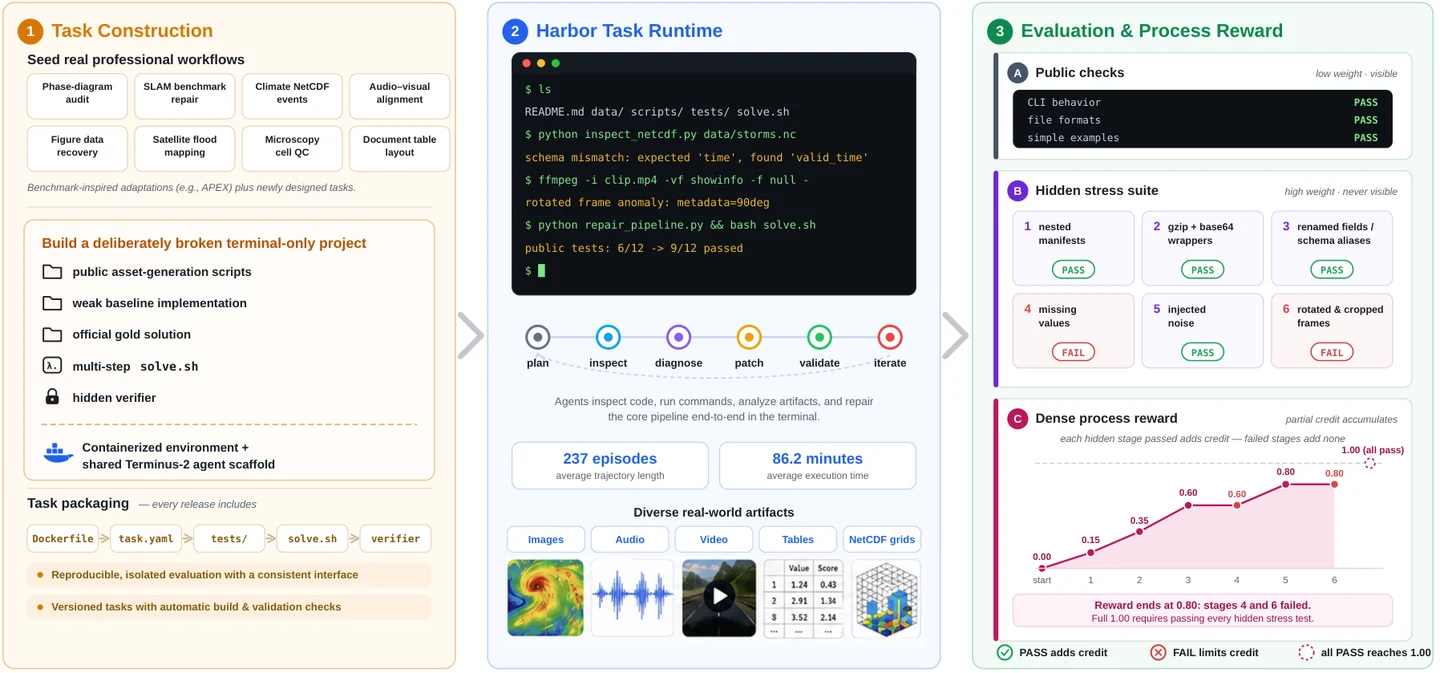
LHTB task construction, terminal execution and dense reward grading pipeline

Long-Horizon-Terminal-Bench: Testing the Limits of Agents on Long-Horizon Terminal Tasks with Dense Reward-Based Grading

Zongxia Li‡, Zhongzhi Li‡, Yucheng Shi‡, Ruhan Wang, Junyao Yang, Zhichao Liu, Xiyang Wu, Anhao Li, Chengsong Huang, Ergan Shang, Yue Yu, Ninghao Liu, Lichao Sun, Haitao Mi, Leowei Liang

arXiv Preprint

‡ Core contribution (marked † in the source paper)

TL;DR A benchmark of 46 long-horizon terminal tasks evaluates sustained agent execution using dense subtask-level rewards. Partial-credit grading exposes intermediate progress that binary task-completion metrics miss.

RST recursive loop extending and verifying long-horizon terminal tasks

RST: Recursive Synthesis for Long-Horizon Terminal Tasks

Zhongzhi Li*, Yucheng Shi*‡, Zongxia Li*, Ruhan Wang, Anhao Li, Zixun Huang, Junyao Yang, Lei Ke, Ninghao Liu, Haitao Mi, Leowei Liang

arXiv Preprint

* Equal contribution · ‡ Project lead (marked † in the source paper)

TL;DR Recursive verified synthesis expands long-horizon terminal tasks by extending successful solutions and realigning instructions and verifiers. It yields 37,484 tasks at approximately $0.05 each and improves Qwen3.5 by up to 10 points across terminal benchmarks.

ReasonAny model-merging workflow and performance across safety, biomedicine and finance

ReasonAny: Incorporating Reasoning Capability to Any Model via Simple and Effective Model Merging

Junyao Yang, Chen Qian‡, Dongrui Liu†, Wen Shen, Yong Liu†, Jing Shao†

ACL 2026 Main Accepted

† Corresponding authors · ‡ Project lead; work conducted during an internship at Shanghai AI Lab

TL;DR Contrastive Gradient Identification separates reasoning-related parameters from task-specific knowledge to prevent destructive collapse during model merging. The method transfers robust chain-of-thought capabilities into domain-specific models without additional training.

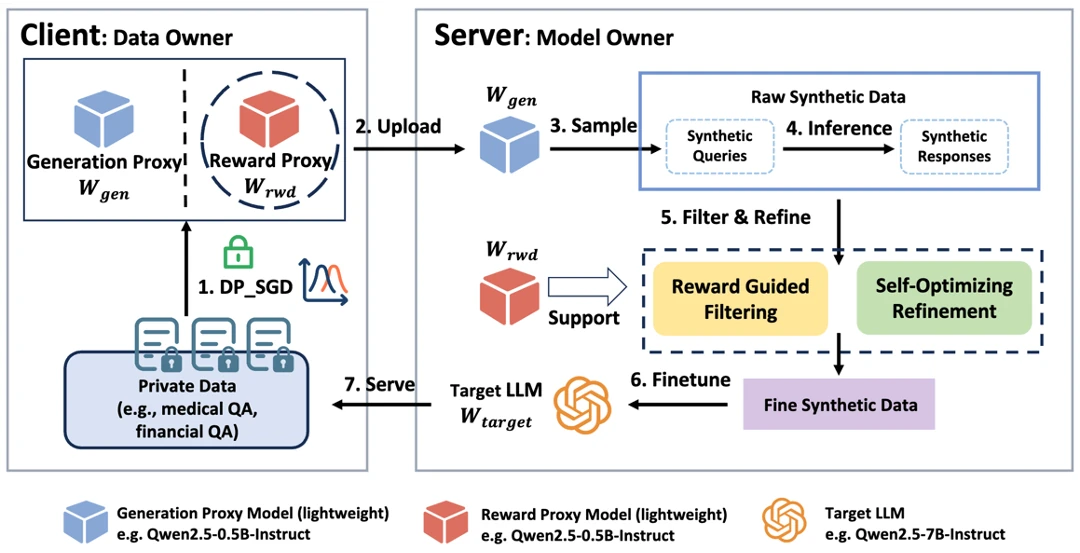
PrivacyRestore client-server workflow for privacy removal and activation-based restoration

PrivacyRestore: Privacy-Preserving Inference in Large Language Models via Privacy Removal and Restoration

Ziqian Zeng*†, Jianwei Wang*, Junyao Yang*, Zhengdong Lu, Haoran Li, Huiping Zhuang, Cen Chen

ACL 2025 Main Accepted

* Equal contribution · † Corresponding author

TL;DR A plug-and-play privacy-preserving inference framework removes sensitive spans before sending inputs to an LLM service. Protected restoration vectors recover useful information through activation steering without retraining the model.

AgentDoG data synthesis pipeline with planning, trajectory generation and filtering

AgentDoG: A Diagnostic Guardrail Framework for AI Agent Safety and Security

Shanghai Artificial Intelligence Laboratory

Full contributor list · Junyao Yang, contributor

Scientific Directors: Xia Hu, Chaochao Lu

Project Co-Leaders (Corresponding authors): Dongrui Liu, Jing Shao

Core Contributors: Dongrui Liu, Qihan Ren, Chen Qian, Shuai Shao, Yuejin Xie, Yu Li, Zhonghao Yang, Haoyu Luo, Peng Wang, Qingyu Liu

Contributors: Binxin Hu, Ling Tang, Jilin Mei, Dadi Guo, Leitao Yuan, Junyao Yang, Guanxu Chen, Qihao Lin, Yi Yu, Bo Zhang, Jiaxuan Guo, Jie Zhang, Wenqi Shao, Huiqi Deng, Zhiheng Xi, Wenjie Wang, Wenxuan Wang, Wen Shen

Technical Acknowledgements: Zhikai Chen, Haoyu Xie, Jialing Tao, Juntao Dai, Jiaming Ji, Zhongjie Ba, Linfeng Zhang, Yong Liu, Quanshi Zhang, Lei Zhu, Zhihua Wei, Hui Xue

Technical Report Contributor

TL;DR A diagnostic guardrail framework uses a unified three-dimensional risk taxonomy to monitor agent trajectories. Fine-grained attribution identifies the causes of unsafe behavior and supports root-cause analysis.

2026

RSR planner, critic and executor pipeline for rewriting verified trajectories

RSR: Scaling Trajectories for Complex Tasks through Recursive Self-Rewrite

Zongxia Li‡, Yucheng Shi‡, Zhongzhi Li‡, Junyao Yang, Ruhan Wang, Chengsong Huang, Fuxiao Liu, Haitao Mi, Jordan Boyd-Graber, Leowei Liang

arXiv Preprint

‡ Core contribution (marked † in the source paper)

TL;DR Recursive Self-Rewrite turns successful trajectories discovered under diverse harnesses into reusable capabilities under a general harness. It expands 2,001 trajectories to 11,094 and improves Qwen-3.8-27B pass@3 from 57.0% to 74.2% on Terminal-Bench 2.

SWR observe, reconstruct and verify workflow for scientific terminal environments

SWR: Self-Supervised Scaling of Terminal Environments for Scientific Domains

Zhongzhi Li*, Yucheng Shi*‡, Zongxia Li*, Junyao Yang, Ruhan Wang, Yu Wang, Jingyuan Huang, Jichao Yu, Ninghao Liu†, Haitao Mi, Leowei Liang

arXiv Preprint

* Equal contribution · † Corresponding author · ‡ Project lead; source role symbols normalized

TL;DR Software-in-the-loop reconstruction derives reference behavior and verifiers from scientific software workflows. Scaling to 500 workflows across 46 software families and six domains improves Qwen3.8-27B on Terminal-Bench 2 from 47.94% to 53.56%.

LHTB task construction, terminal execution and dense reward grading pipeline

Long-Horizon-Terminal-Bench: Testing the Limits of Agents on Long-Horizon Terminal Tasks with Dense Reward-Based Grading

Zongxia Li‡, Zhongzhi Li‡, Yucheng Shi‡, Ruhan Wang, Junyao Yang, Zhichao Liu, Xiyang Wu, Anhao Li, Chengsong Huang, Ergan Shang, Yue Yu, Ninghao Liu, Lichao Sun, Haitao Mi, Leowei Liang

arXiv Preprint

‡ Core contribution (marked † in the source paper)

TL;DR A benchmark of 46 long-horizon terminal tasks evaluates sustained agent execution using dense subtask-level rewards. Partial-credit grading exposes intermediate progress that binary task-completion metrics miss.

RST recursive loop extending and verifying long-horizon terminal tasks

RST: Recursive Synthesis for Long-Horizon Terminal Tasks

Zhongzhi Li*, Yucheng Shi*‡, Zongxia Li*, Ruhan Wang, Anhao Li, Zixun Huang, Junyao Yang, Lei Ke, Ninghao Liu, Haitao Mi, Leowei Liang

arXiv Preprint

* Equal contribution · ‡ Project lead (marked † in the source paper)

TL;DR Recursive verified synthesis expands long-horizon terminal tasks by extending successful solutions and realigning instructions and verifiers. It yields 37,484 tasks at approximately $0.05 each and improves Qwen3.5 by up to 10 points across terminal benchmarks.

ReasonAny model-merging workflow and performance across safety, biomedicine and finance

ReasonAny: Incorporating Reasoning Capability to Any Model via Simple and Effective Model Merging

Junyao Yang, Chen Qian‡, Dongrui Liu†, Wen Shen, Yong Liu†, Jing Shao†

ACL 2026 Main Accepted

† Corresponding authors · ‡ Project lead; work conducted during an internship at Shanghai AI Lab

TL;DR Contrastive Gradient Identification separates reasoning-related parameters from task-specific knowledge to prevent destructive collapse during model merging. The method transfers robust chain-of-thought capabilities into domain-specific models without additional training.

AgentDoG data synthesis pipeline with planning, trajectory generation and filtering

AgentDoG: A Diagnostic Guardrail Framework for AI Agent Safety and Security

Shanghai Artificial Intelligence Laboratory

Full contributor list · Junyao Yang, contributor

Scientific Directors: Xia Hu, Chaochao Lu

Project Co-Leaders (Corresponding authors): Dongrui Liu, Jing Shao

Core Contributors: Dongrui Liu, Qihan Ren, Chen Qian, Shuai Shao, Yuejin Xie, Yu Li, Zhonghao Yang, Haoyu Luo, Peng Wang, Qingyu Liu

Contributors: Binxin Hu, Ling Tang, Jilin Mei, Dadi Guo, Leitao Yuan, Junyao Yang, Guanxu Chen, Qihao Lin, Yi Yu, Bo Zhang, Jiaxuan Guo, Jie Zhang, Wenqi Shao, Huiqi Deng, Zhiheng Xi, Wenjie Wang, Wenxuan Wang, Wen Shen

Technical Acknowledgements: Zhikai Chen, Haoyu Xie, Jialing Tao, Juntao Dai, Jiaming Ji, Zhongjie Ba, Linfeng Zhang, Yong Liu, Quanshi Zhang, Lei Zhu, Zhihua Wei, Hui Xue

Technical Report Contributor

TL;DR A diagnostic guardrail framework uses a unified three-dimensional risk taxonomy to monitor agent trajectories. Fine-grained attribution identifies the causes of unsafe behavior and supports root-cause analysis.

RiseHarness workflow for runtime monitoring, behavioral diagnosis, external research and harness evolution

Harness Self-Evolution for Long-Horizon Terminal Agents

Ruhan Wang, Yucheng Shi‡, Zongxia Li, Junyao Yang, Zhongzhi Li, Yue Yu, Haitao Mi, Dongruo Zhou, Leowei Liang

arXiv Preprint

‡ Internship mentor (marked † in the source paper) · Work conducted during an internship at Tencent

TL;DR RiseHarness iteratively improves agent harnesses while keeping model weights fixed. Successful and failed trajectories, internal execution traces, and a Harness Handbook guide behavior-level edits that are validated through repeated task evaluation.

LHTB 2.0 cost and reward comparison across frontier models on 77 tasks

Long-Horizon-Terminal-Bench 2.0: Automating Diverse Task Construction and Measuring Sustained Agent Progress

Zongxia Li‡, Zhongzhi Li‡, Yucheng Shi‡, Ruhan Wang, Junyao Yang, Chengsong Huang, Zhichao Liu, Xiyang Wu, Anhao Li, Yue Yu, Ergan Shang, Fuxiao Liu, Tong Zheng, Ninghao Liu, Lichao Sun, Haitao Mi, Leowei Liang

arXiv Preprint

‡ Core contribution (marked † in the source paper)

TL;DR LHTB 2.0 expands process-aware terminal evaluation to 77 tasks across 13 domains, including systematically reconstructed scientific and engineering workflows. Three-hour runs and verifier checkpoints measure sustained progress rather than only binary final outcomes.

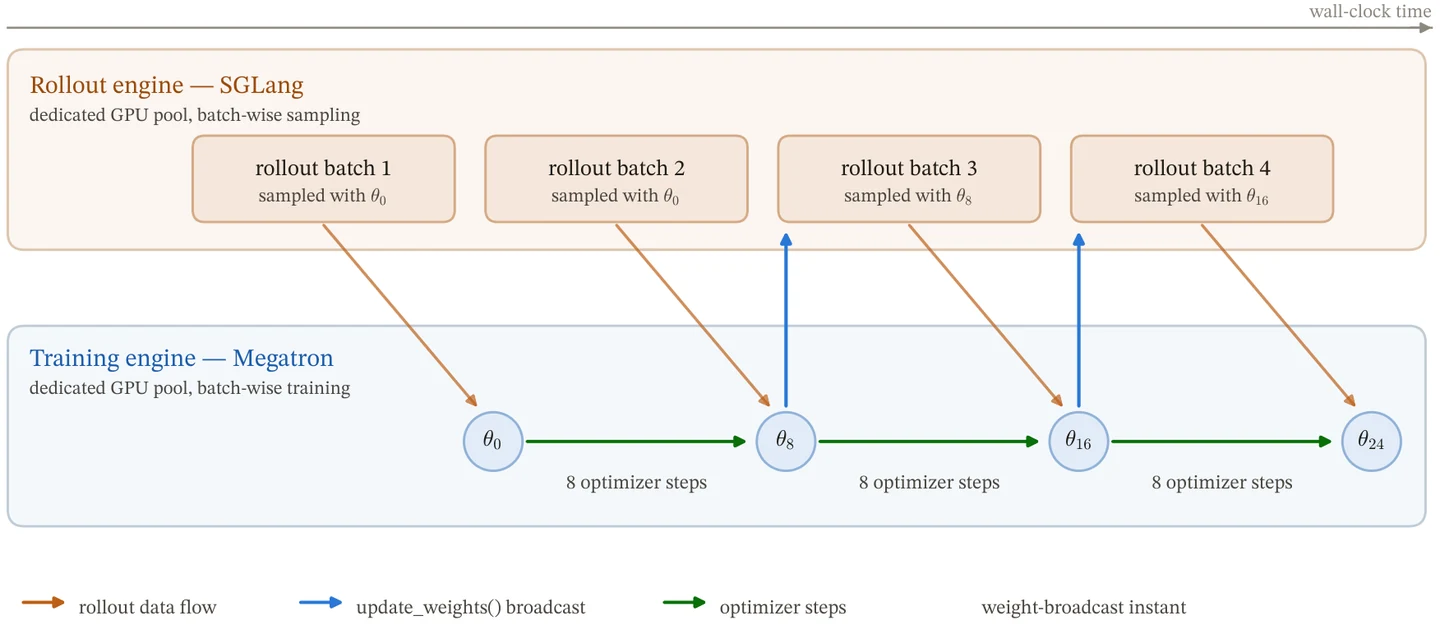
Asynchronous reinforcement-learning workflow with policy lag and training-inference mismatch

Stale but Stable: Staleness-Adaptive Trust Regions for Stabilizing Asynchronous Reinforcement Learning

Junyao Yang†, Yucheng Shi‡, Zongxia Li, Zhongzhi Li, Ruhan Wang, Xiangxin Zhou, Kishan Panaganti, Haitao Mi, Leowei Liang

arXiv Preprint

† Corresponding author · ‡ Project lead; source role symbols normalized

TL;DR Staleness-adaptive trust regions stabilize asynchronous reinforcement learning by contracting high-mismatch outward updates. The method preserves ordinary-token behavior while controlling heterogeneous rollout staleness.

Harness Handbook maps behavior inventory to implementation and code-edit planning

Harness Handbook: Making Evolving Agent Harnesses Readable, Navigable, and Editable

Ruhan Wang, Yucheng Shi‡, Zongxia Li, Zhongzhi Li, Yue Yu, Junyao Yang, Kishan Panaganti, Haitao Mi, Dongruo Zhou, Leowei Liang

arXiv Preprint

‡ Lead project collaborator (marked † in the source paper) · Ruhan Wang conducted this work during an internship at Tencent Seattle

TL;DR A behavior-centric representation maps agent harness responsibilities to their implementations. The BGPD framework uses this handbook to localize code and plan edits as harnesses evolve.

Entropy-gradient inversion contrasts high-entropy reasoning models with low-entropy non-reasoning models

Entropy-Gradient Inversion: Moving Toward Internal Mechanism of Large Reasoning Models

Junyao Yang*, Chen Qian*, Kun Wang, Linfeng Zhang, Quanshi Zhang, Yong Liu†, Dongrui Liu†

arXiv Preprint

* Equal contribution · † Corresponding authors

TL;DR Entropy-Gradient Inversion identifies a robust negative correlation between token entropy and logit gradients as a geometric signature of reasoning capability. CorR-PO incorporates this signature into reward regularization to stabilize reasoning-model reinforcement learning.

Agentic attribution pipeline combining temporal likelihood, agent trajectory and sentence-level attribution

The Why Behind the Action: Unveiling Internal Drivers via Agentic Attribution

Chen Qian, Peng Wang, Dongrui Liu†, Junyao Yang, Dadi Guo, Ling Tang, Jilin Mei, Qihan Ren, Shuai Shao, Yong Liu, Jie Fu, Jing Shao, Xia Hu

arXiv Preprint

† Corresponding author

TL;DR A hierarchical attribution framework explains the historical factors driving LLM-based agent actions, independent of task success or failure. Temporal likelihood identifies critical interaction components, and perturbation analysis localizes influential sentences.

2025

PrivacyRestore client-server workflow for privacy removal and activation-based restoration

PrivacyRestore: Privacy-Preserving Inference in Large Language Models via Privacy Removal and Restoration

Ziqian Zeng*†, Jianwei Wang*, Junyao Yang*, Zhengdong Lu, Haoran Li, Huiping Zhuang, Cen Chen

ACL 2025 Main Accepted

* Equal contribution · † Corresponding author

TL;DR A plug-and-play privacy-preserving inference framework removes sensitive spans before sending inputs to an LLM service. Protected restoration vectors recover useful information through activation steering without retraining the model.

Academic background

Education

National University of Singapore

MComp · Artificial Intelligence

2025 – 2027 (Expected)Singapore

South China University of Technology

B.S. in Computer Science · With honor

2021 – 2025Guangzhou, China
Research & industry

Experience

Tencent Hy Frontier

Research Intern · 青云计划

04/2026 – PresentSingapore

Shanghai AI Lab

Research Intern

06/2025 – 04/2026Shanghai, China

South China University of Technology

Research Intern

07/2024 – 06/2025Guangzhou, China

Tencent

Machine Learning Intern

04/2024 – 07/2024

Shenzhen Stock Exchange

Machine Learning Intern

01/2024 – 04/2024Shenzhen, China
Recognition

Honors & Awards

Excellent Graduation Thesis

06/2025

Outstanding Student Leader

2022 – 2024

Second-Class Scholarship of SCUT

10/2024

Second-Class Award · CUMCM

Guangdong Province

09/2022

Second Prize · Olympic Mathematics Competition

05/2020

Second Prize · Olympic Physics Competition

02/2020
Beyond the paper

Writing

Recursive self-improvement

Terminal-RSI: Recursive Self-Improving Terminal Agents

Verified trajectory rewriting and critic-inheriting policy refinement for long-horizon terminal agents.

Read article ↗
Terminal agents

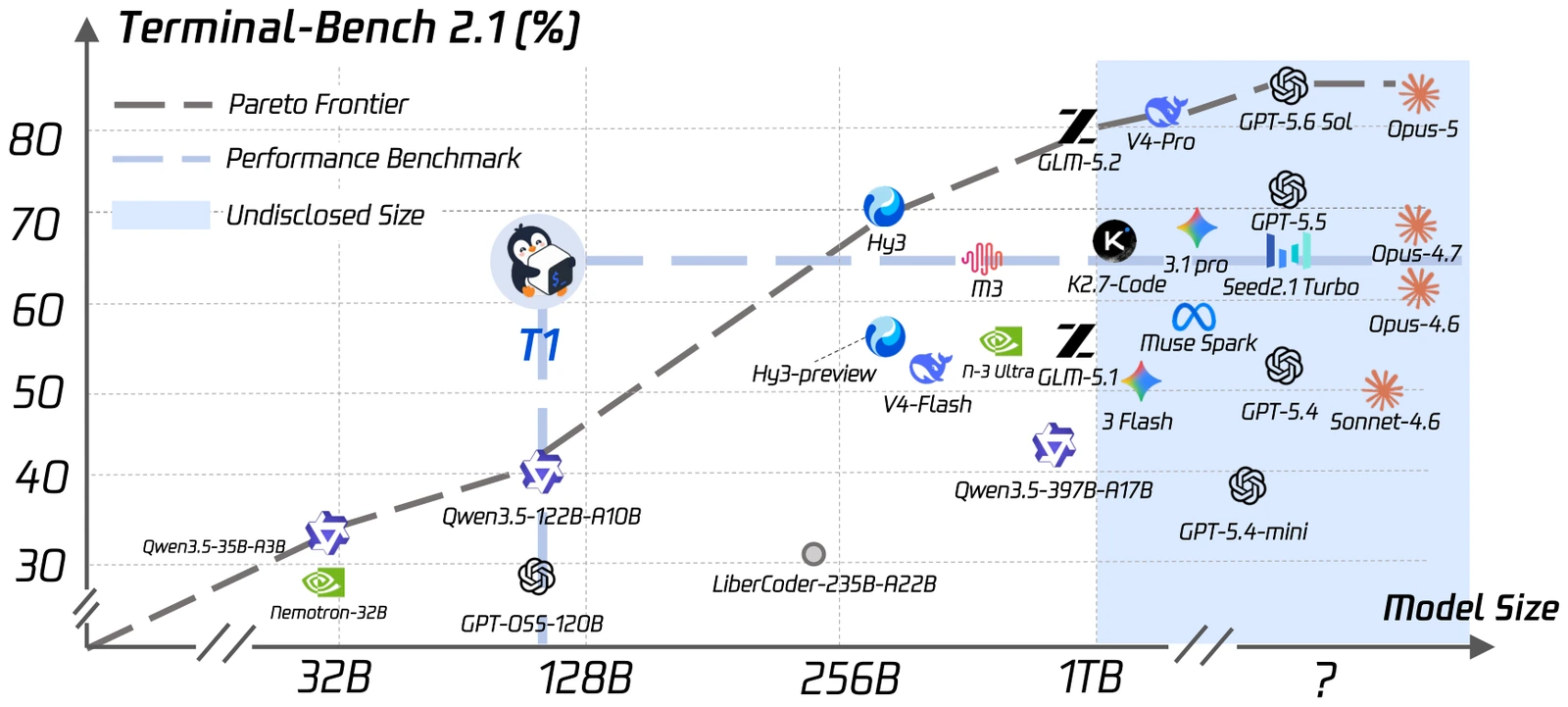
T1: Learning for Long-Horizon Tasks

Stable MoE reinforcement learning and dense verification rewards for a 122B terminal agent.

Read article ↗
Reinforcement learning

Stale but Stable

Understanding rollout staleness in asynchronous RL: origins, diagnostics, and mitigations.

Read article ↗
Reasoning

Entropy-Gradient Inversion

A geometric perspective on the internal mechanisms of large reasoning models.

Read article ↗